Old School RuneScape gives players a classic MMORPG world with deep skills, open choices, and long-term goals. It keeps the simple feel of the 2007 game, yet it also grows through updates shaped by the community.
Players are not forced into one path. Instead, they can train skills, finish quests, fight monsters, trade items, or explore new areas. Because of this freedom, each account can grow in a different way.
What is Old School RuneScape?
Old School RuneScape is a point-and-click fantasy MMORPG made by Jagex. It first launched in 2013 and used a 2007 version of the game as its base. Since then, it has become its own live game with new areas, bosses, quests, and systems.
The game uses a tick system. Each game tick takes about 0.6 seconds. So, movement, attacks, skilling actions, and many other tasks follow this timing. This simple system creates a lot of depth, especially in high-level combat.
There are no fixed classes. For example, one player can train melee today and magic tomorrow. Another player can focus on fishing, mining, or crafting. As a result, account growth stays open and personal.
The game also uses a low-poly visual style. This look is simple, but it helps the game feel clear and easy to follow.
Old School RuneScape Features
The Player-Driven Polling System
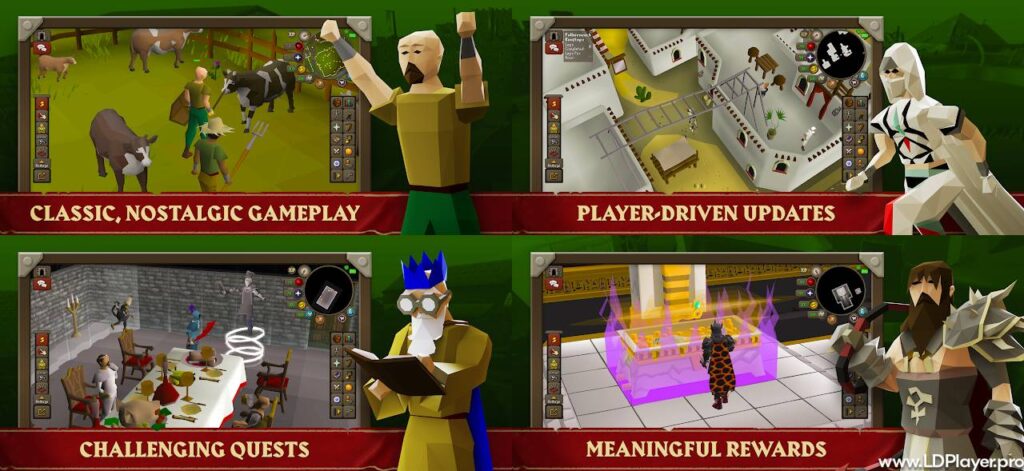
One key part of Old School RuneScape is its polling system. Major updates usually need player support before they enter the game. This helps keep the game close to what the community wants.
Because of this system, players have a real voice. New quests, bosses, items, areas, and changes can go through polls. If enough players support an idea, the update can move forward.
This system also builds trust. The game grows over time, but it still respects its older style.
Deep Skill Progression Sandbox
Skills form the main base of character growth. There are many skills, and each one gives different rewards. Some skills help with combat. Others help with gathering, making items, or earning coins.
Combat skills include Attack, Strength, Defence, Ranged, Magic, Prayer, and Hitpoints. These skills help players fight monsters and other players.
Gathering skills include Mining, Woodcutting, Fishing, Hunter, Farming, and Slayer. These skills help players collect resources, catch creatures, grow crops, and fight assigned monsters.
Artisan and utility skills include Smithing, Crafting, Fletching, Herblore, Runecrafting, and Construction. These skills let players make gear, potions, runes, furniture, and many useful items.
Old School RuneScape rewards steady effort. Reaching level 99 in a skill takes time. However, every level gives a clear sense of progress.
Engaging High-Stakes Combat & Raids
Combat may look simple at first. Yet, later fights can become very technical. Players need good timing, fast gear switches, movement control, and strong game knowledge.
Endgame challenges include the Inferno, Chambers of Xeric, Theatre of Blood, and other major boss fights. These activities test both gear and skill.
The Wilderness adds another danger. In this area, players can attack each other. Losing a fight may mean losing items. Therefore, players must think carefully before entering with valuable gear.
A Fully Realized Global Economy
The Grand Exchange is the main trading hub. Players can buy and sell items with other players through this market.
Prices often change based on supply and demand. For example, a boss drop may fall in price when many players farm it. Meanwhile, skilling items may rise when more players need them.
Because of this system, trading can become its own play style. Some players gather raw materials. Others craft finished items. Some players study prices and trade for profit.
How To Install Old School RuneScape on LDPlayer
Playing the mobile version on LDPlayer can help users run the Android app on a Windows PC. It gives a mobile-style layout with mouse and keyboard support.
1. Download and Setup LDPlayer
Use a Windows PC. Then visit the official LDPlayer website and download the latest stable installer.
After that, open the installer file. Follow the setup steps on the screen. Choose a storage location with enough free space.
2. Initialize the Emulator Environment
Open LDPlayer after installation. Then go to the emulator settings.
Next, adjust CPU cores and RAM based on the PC hardware. This can help the game run smoother. Also, keep enough system resources free for Windows.
3. Access the Google Play Store
Open the System Apps folder on the LDPlayer home screen. Then select Google Play Store.
Sign in with a Google account. Use secure login details and avoid shared accounts.
4. Search and Install the Title
Use the Play Store search bar. Type Old School RuneScape and select the official Jagex app.
Then press Install. The emulator will download and install the game files.
5. Configure Inputs and Launch
Open the game from the LDPlayer home screen. Then use the Keyboard Mapping tool on the side toolbar.
Map useful actions to keys as needed. After that, test movement, camera control, menu use, and clicks before long play sessions.
How To Play Old School RuneScape
The first step is account setup. Players can use a Jagex Account to log in and manage access.
New players begin on Tutorial Island. This area teaches movement, talking to NPCs, basic combat, fishing, cooking, mining, smithing, banking, and questing.
After the tutorial, the character arrives in Lumbridge. This is the first main town for many players. From here, the world opens up.
Questing is a strong early goal. Simple quests teach game systems and give useful rewards. Some quests also give early experience, which helps reduce slow training.
Players should also learn how the map works. Banks, shops, skill areas, teleport spots, and safe zones are important. Knowing where to go saves time.
Combat training should start slowly. Low-level monsters help players understand food, armor, weapons, and attack styles. Later, stronger enemies need better gear and more planning.
Skilling is also important. Fishing and woodcutting can help earn early coins. Mining and smithing teach resource loops. Crafting and fletching help players create useful items.
The Grand Exchange becomes useful once players understand basic item values. It helps with buying gear, selling loot, and preparing for quests.
Safety and Legality
Using a trusted Android emulator like LDPlayer is meant to create an Android environment on a Windows PC. It should not change game files or server communication.
However, players must avoid bots, macros, auto-clickers, and any tool that plays the game automatically. These tools break fair play rules and can lead to bans.
Account safety also matters. Players should use strong passwords and enable Two-Factor Authentication. Also, login details should never be shared.
Phishing links are another risk. Players should only use official login pages and trusted sources. If a message promises free items or easy gold, it should be treated with care.
Old School RuneScape FAQ
Is Old School RuneScape free to play?
Yes. The game has a free-to-play mode with many core skills, quests, items, and areas. Players can also upgrade to membership.
Membership unlocks more of the world. It also adds extra skills, quests, bosses, transport options, and training methods.
Can the same character progress be shared between mobile and PC clients?
Yes. Account progress stays linked to the same character. Players can use mobile, desktop, or supported platforms with the same account.
This means progress, items, skills, quests, and bank contents remain connected.
What is an Ironman account status?
Ironman mode is a special account type. It limits trading with other players and blocks normal use of the Grand Exchange.
Because of this, Ironman players must earn items by themselves. They gather resources, make gear, complete quests, and get drops without normal trading support.
This mode gives a harder and more self-sufficient way to play.
Final Words
Old School RuneScape remains popular because it gives players freedom, challenge, and steady progress. Its simple look hides deep systems, long goals, and many ways to play.
Some players enjoy quests. Others focus on skills, bosses, trading, or PvP. Because the game does not force one route, every player can build a different journey.
With the right setup, safe account habits, and clear goals, the game can feel rewarding for a long time. Gielinor offers many paths, and each step can lead to a new goal.